Part of the Stanford/Elsevier Top 2% Scientist Rankings 2025

Categoria: Politica Pagina 6 di 7

Reducing and Preventing Digital Discrimination: Digital Inclusion Strategies in Europe (Chapter)

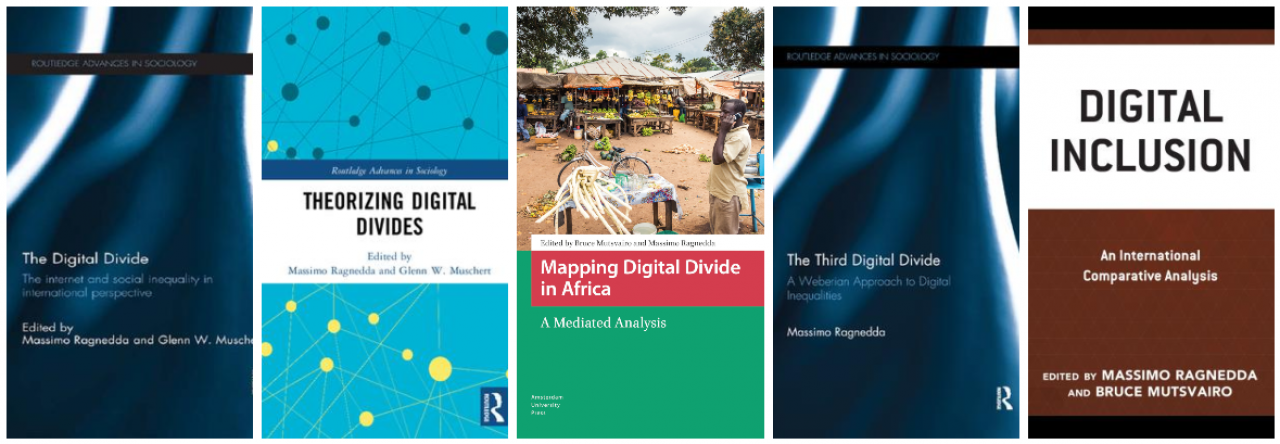
Digital inclusion. An internationalMassimo Ragnedda (2018), Reducing and Preventing Digital Discrimination: Digital Inclusion Strategies in Europe, In Ragnedda, M., and Mutsvairo, B. (eds) Digital Inclusion. An International Comparative Analyses, London: Lexington Book, pp. 3-18.

Introduction

The advent of the Internet has brought changes to citizen’s lives, influencing the patterns and practices of everyday life. It is clear that the growth of the information society has revolutionized the way in which citizens work, learn and socialize. However, it seems that some scholars (Dyson 1997; Gilder 1990, 2000; Kelly 1998; Negroponte 1995; Toffler 1970, 1980; Turner 2006;) have often overemphasized the benefits and the positive aspects brought by new technologies of communication. These digital prophets, defined by Slouka (1995: 8) as techno-evangelists, have a hyper-positive vision of the Internet and see it as a panacea for all social issues. This position does not take into consideration issues related to unequal access and the use of digital technologies. For this reason, it is important to also analyse the obstacles and barriers that prevent individuals, and certain social groups, from accessing and properly using technologies. These obstacles are at the base of digital inequalities, both between different regions of the world and within wealthy and prosperous areas. There are, indeed, clear differences in terms of Internet usage and digital skills within the same area (Brandtzæg 2010; Selwyn 2004; Van Dijk 2005).

Digital Capital. A Bourdieusian Perspective on the Digital Divide

cover book digital capitalMassimo Ragnedda and Maria Laura Ruiu (2020), Digital Capital. A Bourdieusian Perspective on the Digital Divide, Emerald Publishing

Description

Starting from the assumption that digital capital is a capital in its own right, and can be quantified and measured as such, the authors of this book examine how digital capital can be defined, measured and impact policy.

Using the Bourdieusian lens, this book makes a critical contribution to the field by examining in depth the notion of digital capital and by introducing a new theoretical toolkit in order to fully conceptualise it. Against this theoretical background, the authors propose a set of indicators that can be used to measure digital capital at an individual level. Ultimately, readers will learn how this can be used by policy makers to tackle social inequalities which are based on the digital exclusion of citizens.

Reviews

As digital communications becomes ever more central to everyday life, work and leisure, their impact on inequality becomes increasingly profound. Is there a new ‘digital capital’ acquired by those who gain most from these technologies? The authors, established experts in this field, address this problem with a thorough and informed analysis of the concept, and its implications for policy and understanding.’

– Peter Golding, Professor, Northumbria and Newcastle Universities, UK

Does Digital Exclusion Undermine Social Media’s Democratizing Capacity?

New Global StudiesMutsvairo, B. & Ragnedda, M. (2019). Does Digital Exclusion Undermine Social Media’s Democratizing Capacity?  New Global Studies, doi:10.1515/ngs-2019-0035

Claims have been made that the advent of social media and its assumed ability to fuel social strife and organize anti-government protests has empowered people around the world to successfully challenge repressive authorities. However, in an era in which several issues ranging from digital colonialism to digital exclusion among other challenges, have become so dominant, it is our role as researchers to question some of these claims especially when they seem unsubstantiated. Sharing or finding solidarity is something that can be done on social media platforms but nothing is as critical as being part of the digital community. In that regard, questions surrounding digital exclusion are critical especially when discussing the extent to which social media influences democracy, questions that several scholars from every corner of the world are currently seized with. In this article, we not only identify social media’s potential but we also probe problems associated with beliefs that digital networks have the capacity to support democratization. Contemporary societies should be asking what the real gains of the fall of the Berlin Wall are in the work of these fundamental digital shifts, which have left both negative and positive outcomes on all countries including established Western democracies.

[…]

Visiting Scholar at the Khalifa University, Abu Dhabi

khalifa UniI am really glad and happy to be Visiting Scholar at the Khalifa University, Abu Dhabi (1st Ranked University in the U.A.E.). During my time at Khalifa University (November-December 2019), I’ll be working as “Research collaborator” for the project lead by Prof. Muschert, Glenn W. (2019-2021) “Cultural Determinants of Digital Skill Levels among Internet Users in Abu Dhabi.” Khalifa University of Science & Technology Faculty Start-Up Grant.

I will be working with Prof. Muschert to apply the Digital Capital Index to Internet Users in Abu Dhabi and investigate the level of digital inequalities in U.A.E.

External examiner for a Ph.D. defence in Madrid

complutense tribunalThe 28th of October 2019, I acted as external examiner for a Ph.D. dissertation at the Facultad de Ciencias Politicas y Sociología de la Universidad Complutense, Madrid (Spain). The candidate, Daniel Calderón Gómez, brilliantly defended a thesis titled “Capital digital y socialización tecnológica: una aproximación bourdiana al estudio de la desigualdad digital y la estratificación social entre la juventud“. The candidate analysed youngsters’ variety of digital practices and forms of technological exploitation, in connection to their biographical trajectories of technological socialization, by using the constructivist structuralism of Pierre Bourdieu. The dissertation tries to unravel the role that younger generations play in information society, aiming at the dismantling of the cyber-utopian perspectives that glorify natural affinity between youth and digital world –by means of concepts such as digital natives or digital generations–.

Keynote Talk: Moscow Reading 2019

keynoteIn my Kenyote talk at the 11th edition of the Moscow Reading Conference 2019, held at the Faculty of Journalism, Lomonosov Moscow State University, Moscow, I both focused on the conceptualization and operationalization of Digital Capital. I stressed how Digital Capital should not be perceived as a subset of other capitals, but should be conceptualized as a specific capital. Furthermore, I presented our empirical model and how we operationalized and measured digital capital. Finally, I explained how this model could be replicated in different socio-cultural contexts.

Measuring Digital Capital: An empirical investigation

nms-cover-socialMassimo Ragnedda, Maria Laura Ruiu, and Felice Addeo (2019). Measuring Digital Capital: An empirical investigation. New Media and Society. 1-24.  https://doi.org/10.1177/1461444819869604

Abstract

This article develops a Digital Capital Index by adopting the definition provided by Ragnedda, who defines Digital Capital as the accumulation of digital competencies and digital technologies, and the model for measuring it developed by Ragnedda and Ruiu. It aims to develop a measure that can be replicated for comparison in different contexts. This article contributes both theoretically and empirically to the literature by (a) consolidating the concept of Digital Capital as a specific capital and (b) empirically measuring it. A Digital Capital Index is developed through an exploratory factor analysis (EFA) and validated with a representative sample survey of 868 UK citizens. The validation procedure shows that the Digital Capital Index is associated with socioeconomic and sociodemographic patterns, such as age, income, educational level and place of residence, while it appears not to be related to gender.

Introduction

This article develops a Digital Capital Index (DCI) by adopting a definition of Digital Capital as ‘“a set of internalised abilities and aptitudes” (digital competencies) as well as “externalised resources” (digital technology) that can be historically accumulated and transferred from one arena to another’ (Ragnedda, 2018). This definition conceptualises Digital Capital as a specific capital (though intertwined with other capitals). Moving on from this conceptualisation, Ragnedda and Ruiu (2019) proposed some indicators to measure Digital Capital. However, this model construct has hitherto never been tested. This article fills this gap in the literature by exploring the empirical application of these indicators which were developed only at a theoretical level.

Keynote talk: The Digital Capital Index: monitoring citizens’ digital inclusion

EDtA_ItXsAIQYZdIt has been a real pleasure to give a keynote talk on Digital Capital and Digital Inclusion at the “One day colloquium on Digital Inclusion” in Brussels,  the 5th of September 2019. The event has been organized by IDEALiC, a 4-year project funded under the research program BRAIN-BE of the Federal Science Policy (2015-2019). In my keynote speech I focused on the Digital Capital Index and how it can be used, by policy makers, charities and foundations, to address digital inclusiveness and promote digital rights. The “One day Colloquium” was devoted to the presentation of the results of the project carried out over the past 4 years by the Vrije Universiteit Brussel (VUB), Université Catholique de Louvain (UCLouvain) and the Fondation Travail-Université (FTU) and has been financed by BELSPO. The discussion on this theme was enriched by the experiences of field actors from the three regions and by the contributions of work carried out in other European countries.

VI edition of EU China Dialogue Summer School of Media and Communication Summer school

me in chinaIt has been a great honor and pleasure to be one of the invited teachers at the 6th Summer School at PKU in 15-24 July 2019, organized by the China Media Observatory (CMO) of Università della Svizzera Italiana (USI) in cooperation with School of Journalism and Communication of Peking University (PKU). The European Media and Communication Doctoral Summer School (SuSo), the Europe-China Dialogue: Media and Communication Studies Summer School (ECDSS) has been successfully organized for 5 years, taking place in Beijing (China), Lugano (Switzerland), and Brussels (Belgium).

The 2019 programme had a new format and emphasis that focus more on “scientific training” – the provision of theoretical and methodological guidance for PhD students, postdocs and graduate students who are eager to engage in research at the early stage of their academic career. It aims to bring together scholars from different cultures to shed light on contemporary issues in (and not limited to) media, communication, political economy and cultural studies. As the fast-changing world is reshaped by the digitalization of the media sphere, scholars in Europe and China are facing the same challenges posed by the new information world that is full of misinformation, radical emotions, fragmented knowledge and deep uncertainties. The Summer School provided a platform linking scholars from the two great civilizations in order to foster the generation of new ideas or solutions for a better global communication exchange under the framework of Europe-China Dialogue.

During my time in Beijing, I taught classes and discussed with more than 30 students from Europe, USA and China students. Furthermore, we visited the CCTV and China Daily headquarters.

IAMCR MADRID 2019

IAMCR presentationThe IAMCR 2019 was the largest conference ever organized by IAMCR, with 1,785 registered participants from 83 countries and 5 continents. The International Association for Media and Communication Research – the preeminent worldwide professional organisation in the field of media and communication research – organized the conference at the Universidad Complutense de Madrid from the July 7 – 11, 2019.

The day before the main conference, I co-organized with my colleagues Bruce Mutsvairo (University of Technology Sydney) and Kristin Skare Orgeret (Oslo Metropolitan University) a preconference/Special issue Information, Communication and Society. The preconference Era or Error of Transformation? Assessing Afrocentric Attributes of Digitalisation has been really successful with 18 case studies presented and discussed.

Pagina 6 di 34

Powered by WordPress & Tema di Anders Norén