I know: in the larger economy of academic recognition, 1,000 citations on Google Scholar is not a dramatic event. It is not a prize, not a major announcement, not something that should be inflated beyond what it is.
Still, academic work takes time. It requires years of reading, writing, revising, doubting, rewriting, and then waiting to see whether what we have produced will be useful to others. For this reason, I think it is important to occasionally pause and acknowledge even modest achievements.
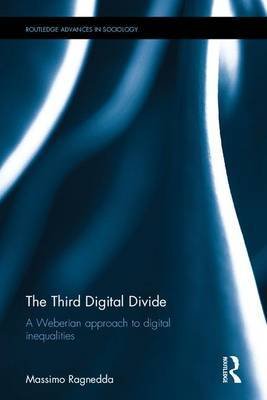
One of my books, The Third Digital Divide: A Weberian Approach to Digital Inequalities, has now reached 1,000 citations on Google Scholar. This means that 1,000 scholarly works — articles, books, chapters, and other academic contributions — have cited or engaged with it. For me, this is a small but meaningful milestone.
The book was published with Routledge in 2017. Its aim was to offer a sociological interpretation of digital inequalities through Max Weber’s theory of stratification. At the time, much of the discussion around the digital divide still focused heavily on access: who had Internet access, who did not, and how the gap could be reduced. This was, of course, important. But it was also insufficient.
The main idea of the book is that digital inequalities cannot be understood only by looking at access to technology. What matters is also how people use digital technologies, what skills and resources they bring to that use, and whether they are able to convert digital participation into better life chances.
In this sense, the book argued that the digital divide should be understood across three levels. The first concerns access. The second concerns skills, autonomy, and quality of use. The third concerns outcomes: the social, economic, cultural, and political benefits that people are able — or unable — to obtain from their engagement with digital technologies.
This third level remains, for me, the most important. It shifts the question from “Who is connected?” to “Who benefits from being connected?” This distinction matters because digital inclusion does not automatically produce social inclusion. People may have access to digital tools and still remain disadvantaged if they lack the resources, skills, confidence, networks, or institutional support needed to transform digital use into meaningful opportunities.
The book also argued that digital inequalities are deeply connected to existing social inequalities. Drawing on Weber, it suggested that class is crucial, but not sufficient. Status, prestige, group affiliation, and power also shape how people engage with digital technologies and what they are able to gain from them. In other words, the digital sphere does not stand outside society. It reflects, reproduces, and sometimes intensifies existing forms of stratification.
Reaching 1,000 citations does not mean that the book answered all questions. It certainly did not. But it suggests that the argument has been useful to other scholars, and that the idea of the third digital divide has travelled into wider debates on digital inequality, digital capital, social stratification, and the social consequences of digital technologies.
To mark this small milestone, I will make the book available free of charge to those who request a copy, where sharing rights allow. Download the full book here
This is not a grand celebration. Just a small academic moment worth acknowledging. Because in a profession where much of the work is invisible, delayed, or quietly absorbed into other people’s thinking, it is good, every now and then, to recognize that something we wrote has had a life beyond us.