The Ragnedda and Ruiu Framework: An Integrated Theory of Digital and AI Inequality
My research develops an integrated sociological framework to explain how digital and algorithmic systems reproduce social stratification. This model connects the resources individuals possess (Digital Capital) to the outcomes they achieve (The Third Digital Divide), while accounting for new mediating forces like Algorithmic Power and Environmental Habitus.
Core Components of the Framework
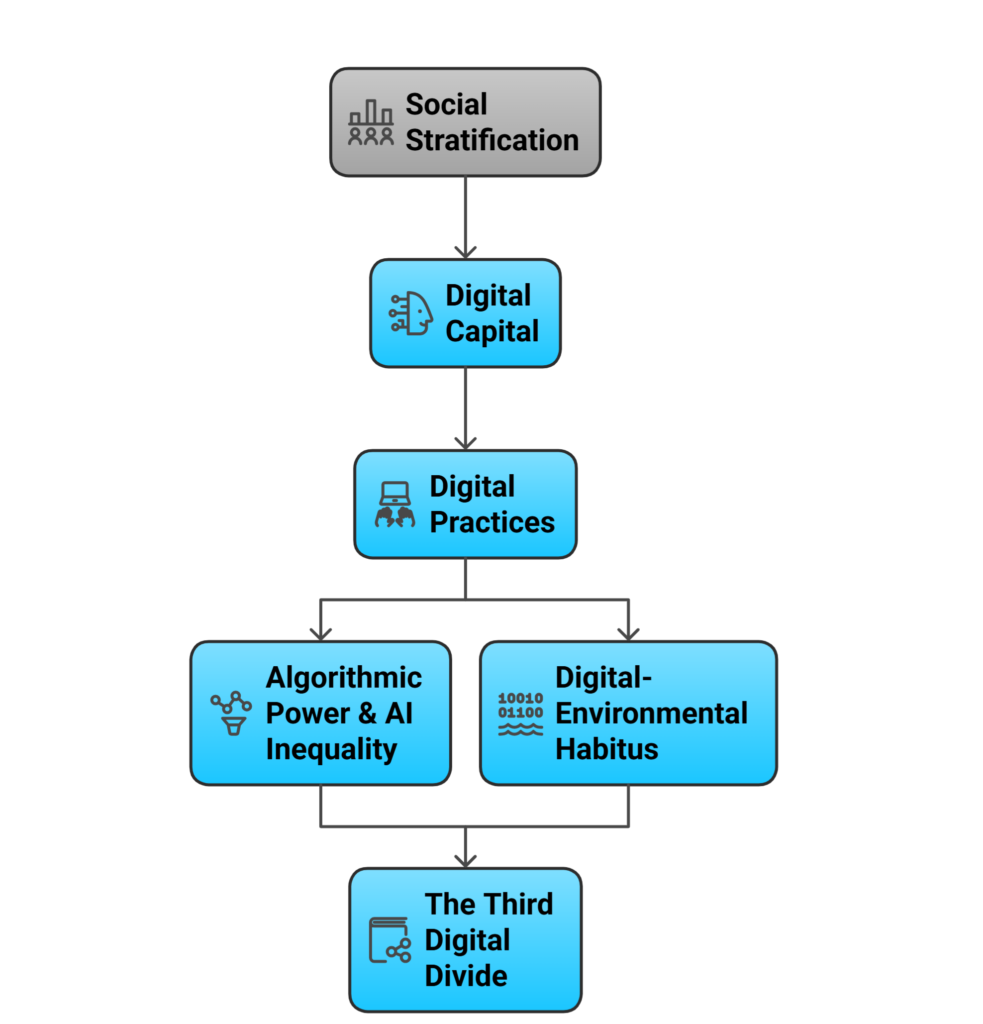
- Social Stratification (The Input): Existing offline backgrounds (class, status, and power) provide the initial conditions and determine the “capital type” individuals bring to the digital sphere.
- Digital Capital (The Engine): The accumulation of digital skills, competencies, and resources that can be converted into social advantage. This is measured through the Digital Capital Scale.+1
- Digital Practices (The Process): How digital capital is deployed in everyday life through usage and engagement, which in turn shapes digital habits.
- The Third Digital Divide (The Outcome): The final stage of inequality where digital engagement translates into unequal social returns and life chances.
- Mediating Filters: Algorithmic Power & AI Inequality: As detailed in The Inequality Regime of AI (2026), this represents how algorithmic systems act as a regulative filter, redistributing visibility and opportunity.+1
- Digital-Environmental Habitus: The dispositions through which environmental orientations shape everyday digital practices, acting as an ecological filter for digital interactions
How the Framework Functions: A Multi-Level Approach to Inequality
This integrated model (Figure 1) explains the “Inequality Loop“ where social origins dictate the initial level of capital an individual can accumulate and convert.
- Measuring Digital Capital: To empirically test this framework, I developed the Digital Capital Scale. This cross-nationally validated instrument allows researchers to quantify digital resources and skills as a specific form of capital that can be “exchanged” for social benefits.
- The Conversion Process: The transition from Digital Practices (how we use the internet) to life outcomes is not neutral. My research identifies two critical “filters” that determine who wins and who loses in the digital age:
- Algorithmic Power & AI Inequality: As theorized in The Inequality Regime of AI (2026), AI systems act as a regulative filter. They redistribute visibility and opportunities, often reinforcing existing social biases through automated resource allocation.
- Digital-Environmental Habitus: This ecological filter explains how our environmental orientations shape our digital behaviors, creating a nexus between digital inclusion and environmental sustainability.
- The Third Digital Divide: The final stage of the framework represents outcome-based inequality. It is the point where digital engagement translates back into tangible social advantages (or disadvantages) in economic, political, and cultural spheres, thus completing the cycle of social stratification.
Download Full List of Publications (PDF)
For a searchable version of these works, please visit my Research Page